- B-68, Lane No. 13, Ravindrapuri, Varanasi
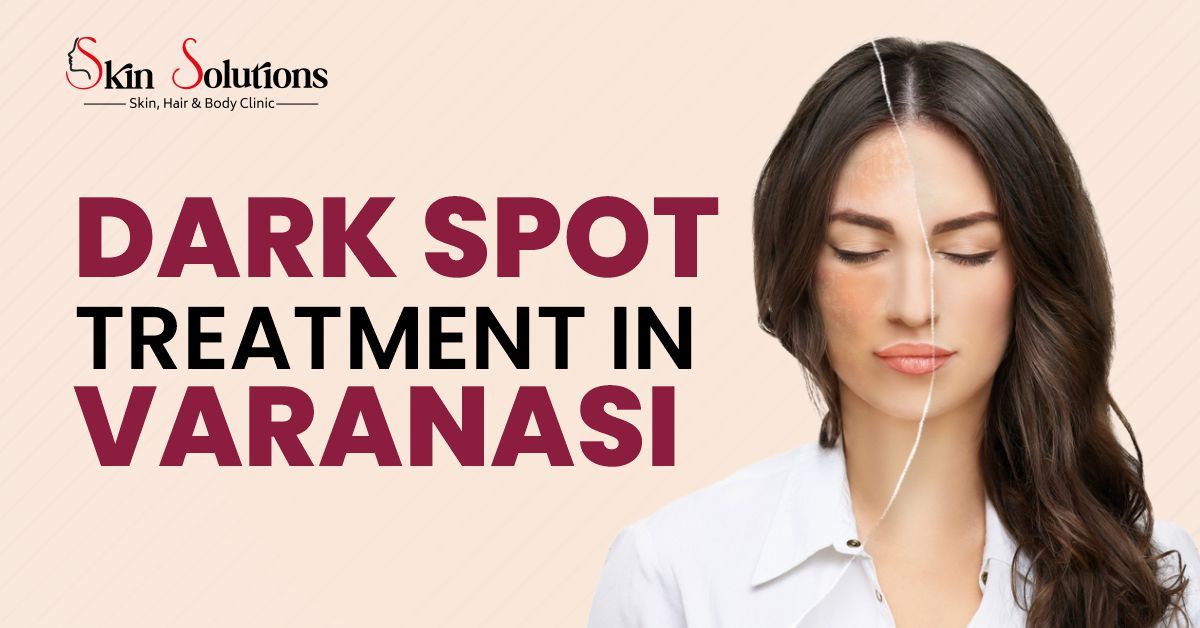
Dark Spot Treatment in Varanasi – Dark spots are among the most common skin issues in the present day, affecting people of different age ranges and skin types. These stubborn patches often appear unexpectedly — sometimes after acne, sometimes due to sun exposure, sometimes during hormonal shifts, and sometimes without any clear reason at all.
Though they’re not considered medically harmful, however, they may seriously impact your confidence and self-esteem, especially if they’re visible on areas such as the neck, face, or hands.
Thanks to advances in dermatology technology, Dark Spot Treatment in Varanasi has become more efficient, accurate, and secure than it was previously, helping numerous people to restore not just their skin’s brightness but also their confidence in themselves.
Knowing why dark spots develop and what they are able to do to be dealt with is vital to selecting the appropriate treatment. Additionally, understanding the various types of pigmentation will help to set realistic expectations of treatment options and provide a more secure and more customized skin experience.
This guide takes the reader through everything you need to be aware of about dark spots, including their causes, types, and causes, to the most effective treatments that are available at Varanasi and includes essential advice on aftercare and frequently requested queries.
At the conclusion, we’ll also discuss what skin Solution Varanasi provides, advanced, patient-focused treatments for dark spots that employ an ethical and scientific approach.
Hyperpigmentation, also known as dark spots, is caused due to the production of excessive melanin, the natural pigment that gives skin shade. Although melanin shields skin from UV Rays, its overproduction causes unbalanced patches, marks, and the appearance of discolouration. One of the main causes of hyperpigmentation is too much sun exposure.
UV radiation can stimulate melanocytes (melanin-producing cells), which causes them to overwork and deposit more pigment into the skin. The people who live in areas with a lot of sunshine who spend a lot of time outdoors or avoid sunscreen are particularly susceptible to tanning skin spots, sun spots, and uneven skin pigmentation.
Another significant cause of chronic post-inflammatory hyperpigmentation (PIH) that can occur following acne breakouts, insect bites, rashes, burn marks or any sort that causes skin inflammation. When the skin heals, there are times when it leaves spots of darkening that may take a long time to disappear.
The hormonal changes have a role to play, especially for conditions like melasma, which can be seen frequently during pregnancies, as a result of tension, thyroid issues, and even extended exposure to the sun, coupled with fluctuating hormone levels. Habits of life, genes, as well as pollution, poor proper skin care and age may also increase the amount of pigmentation.
These factors all point to one crucial point: the majority of dark spots will not disappear by themselves and need medical intervention, particularly when the dark spots lie deeply within the skin layer.
Dark spots do not look identical, which is why a thorough diagnosis is vital. A few are minor and are well with gentle treatment, whereas others are deeply rooted and require sophisticated solutions.
Sun spots, sometimes referred to as liver spots, are typically seen when people are older or with prolonged exposure to the sun. They’re brown, flat patches which typically appear on the cheeks, forehead and hands. Freckles are, on the other hand, small scattered spots that are usually the result of the combination of genetics as well as exposure to sunlight. They are not harmful; however, they grow larger and darker during the daytime.
Melasma is a difficult form of pigmentation that manifests in symmetrical patches across the forehead, cheeks, or on the upper lip. The condition is extremely influenced by sunlight and hormones, and is known to change in the course of.
Hyperpigmentation after post-inflammatory inflammation is a different, frequently encountered type, particularly among patients who’ve experienced acne. The brown spots can last for a long time after the pimple has healed and can become more prominent after exposure to light.
Understanding the type of your pigmentation can help dermatologists select the most efficient method for dark spots and achieve more effective results, while also reducing the chance of irritation or repeated incidence.
The treatment of pigmentation demands determination, patience, as well as the correct mixture of procedures that are scientifically proven. A single solution is not suitable for all, and that’s why dermatologists thoroughly examine the skin prior to deciding on the best treatment.
In Varanasi, the most modern dermatology clinics offer a wide range of effective and effective treatments for removing pigmentation that are tailored to the individual’s requirements.
One of the more common ways to start is through the use of products for topical use that are medicated. Doctors may prescribe retinoids vitamins C, vitamin C supplements, niacinamide, the kojic acid formulations and azelaic acid creams that assist in lightening the look of your skin slowly.
They regulate the production of melanin and speed up skin renewal, and can improve the overall appearance. In contrast to creams sold over the counter, prescription formulas are more effective, controlled, and more secure to use for a long time if they are carefully monitored.
Chemical peels are yet another commonly employed and effective treatment to remove pigmentation. Peels are used to exfoliate the top layers of skin with non-toxic chemical solutions that allow fresh, even-toned skin to be revealed.
Different kinds of peels like mandelic, glycolic, lactic and TCA peels are selected based on the intensity of pigmentation as well as the sensitivity of the skin. Peels do not just remove dark spots, they additionally improve the texture, eliminate pores, improve the appearance and increase the smoothness.
To treat deeper pigmentation, such as melanomas or acne scars, Rejuvenation therapies, as well as sophisticated treatments, are suggested. They work by stimulating collagen, increasing the turnover of cells, as well as reducing melanin clusters. They deliver fresher, healthier, clearer skin over time.
If the pigmentation is deeper within the dermal layer, the laser therapy in Varanasi can be one of the best treatments. Laser therapy targets deposits of pigment by focusing precise light beams and breaking them down into small particles, which are then eliminated by the body.
These sessions are pleasant with minimal discomfort and are very effective when carried out by a dermatologist who is trained. The effects show gradual, making the appearance of the skin more uniform and radiant in the span of just a couple of weeks.
No matter what treatment you choose, the most important thing is the same: sun protection. If you don’t use sunscreen properly and with proper care, the most effective treatments could fail, or skin pigmentation could reappear.
Dermatologists highly recommend SPF50plus sunscreen, a protective garment, as well as a consistent skincare routine to boost outcomes and keep the clarity of your skin.
Selecting the best dermatologist for pigmentation problems in Varanasi can play a significant role in the achievement of long-lasting and safe outcomes. Experience, expertise and diagnosis that is accurate diagnosis, the latest technology, and customised treatments are essential in the treatment of pigmentation.
Dark spots can appear similar, but they can be different. If treated improperly, it could cause the problem to worsen. So, it is important to choose a clinic that places a high value on the education of patients and transparency, as well as scientific evaluation and hygiene practices.
If it’s about research-based and patient-focused Dark Spot Treatments in Varanasi Skin Solution, Varanasi is now an established brand. It combines the latest skin care techniques with highly skilled specialists who understand the intricacies of the process of pigmentation.
The treatment method they employ isn’t an all-encompassing approach; rather, each patient is given a customized regimen based upon their complexion type, depth of pigmentation, as well as medical history and other lifestyle aspects.
What is it that makes Skin Solution Varanasi unique is its dedication to providing safe as well as ethical, and scientifically-based treatments. They provide a wide selection of treatments for pigmentation, such as rejuvenation treatments, chemical peels as well as advanced treatments as well as carefully-controlled routines for topical treatments.
Clinic staff adhere to high hygiene standards and guarantee each procedure is carried out by using the most precise equipment and instruments. The patients appreciate the welcoming and open consultation, in which each step and the expected result is explained clearly.
If you’re searching for an efficient, reliable, customized Dark Spot Treatment located in Varanasi, Skin Solution Clinic Varanasi is the place to go. Solution Varanasi provides carefully curated products that are designed to bring back the natural beauty of your skin and luminosity.
Their method of science, paired with expert assessment and secure techniques, will help you get lasting results that last for a long time. If your skin’s pigmentation is light to moderate or even deep, it is possible to trust the team at Skin Care Clinic to help you through your transformation process.
1. How Long Will Dark Spot Treatment Need to Be Before Showing Positive Results?
The majority of patients notice improvement after 3-6 weeks. However, the deeper coloration might require longer. The timeframe varies based on the kind of coloration as well as the treatment chosen, along with the skin’s healing process.
2. Can Dark Spots Come Back After Treatment?
Yes, it is possible to recur in the event of sun exposure being neglected or if hormone triggers remain inactive. A consistent aftercare routine, regular use of sunscreen and regular maintenance appointments can prevent the recurrence of the condition.
3. Are Laser Treatments Suitable for The Treatment of Dark Spots?
The procedure is secure only when it’s performed by skilled dermatologists who are familiar with Indian skin types. A proper setting and professional supervision assure excellent results and the least amount of time to recover.
4. Can Chemical Peels Be Used on Every Type of Skin?
The majority of skin types are able to be helped by chemical peels; however, the amount and style should be tailored to suit your skin. Sensitive skin may require milder formulations.
5. Can Home Remedies Remove Dark Spots Completely?
The home remedies are able to lighten superficial spots, but they are not able to treat deep shade. Professional treatment options provide faster as well as safer, and longer-lasting outcomes.
6. What Number Sessions Will I Require to Remove My Pigmentation?
On average, 3-6 sessions are necessary based on the degree of pigmentation. Deep melasma may require ongoing maintenance.
7. Does Sunscreen Actually Need to Be Used? Absolutely. The sunscreen is the main aspect of treating pigmentation as well as prevention. A single day of exposure to sunlight with no SPF could reverse the progress made over a period of time.

Welcome to Skin Solutions, your trusted clinic for advanced skin, hair, and body treatments. Our expert team is dedicated to helping you look and feel your best every day.